Friday, September 12, 2014

12 Sept 2014 - pit-iful

Remove the wooden beam from your eye first;
then you will see clearly
to remove the splinter in your brother’s eye.”

This is a passage we often read as saying something other than what it says. Our calling is to remove the splinter from our brother's eye. We act as if this is something which we want to do that is discouraged. But really, helping a brother to remove a splinter is a highly personal thing which is unlikely to be fun for the person doing it.  Though it is more fun, it seems, than dealing with our own issues. Rather than helping our brother out of love we use him as a distraction from our own shortsightedness!

But we are being trained as disciples. We are supposed to become like our teacher. There are millions falling in the pits of sin all around us and we cannot help because we don't see much better than them.

Rather than talk about splinters that only serve as distractions from our own hearts we need to be more like Paul. He is always an example of what he preaches.

No, I drive my body and train it,
for fear that, after having preached to others,
I myself should be disqualified.

More than almost anyone his life shows a one to one correspondence between his preaching and his living. How does he do it? Single-pointed focus on the goal:

Do you not know that the runners in the stadium all run in the race,
but only one wins the prize?
Run so as to win.

Because Paul knows his purpose he is willing to surrender some of his own rights in order to pursue it. He knows how it important it is that he preach the gospel. He isn't doing it pridefully, as if he is earning God's love.

If I preach the Gospel, this is no reason for me to boast,
for an obligation has been imposed on me,
and woe to me if I do not preach it!

If it was an ego-thing Paul would be blind to the needs of his congregation. But as it is Paul does it because his goal is the kingdom. His heart is filled with God's priorities, with the roads of pilgrimage. The splinter is gone from his own eye. He genuinely cares that the people he serves also have their eyes healed.

Although I am free in regard to all,
I have made myself a slave to all
so as to win over as many as possible.
I have become all things to all, to save at least some.
All this I do for the sake of the Gospel,
so that I too may have a share in it.

May God be our first priority. May we want to see him more than anything. And as we grow in that vision may he use us to share it with others.

My soul yearns and pines 
for the courts of the LORD.
My heart and my flesh
cry out for the living God.

Thursday, September 11, 2014

11 Sept 2014 - lay down your weapons


Knowledge inflates with pride, but love builds up.

Knowledge is the sort of thing that takes facts like "there is no God but one" and "there is no idol in the world" and uses those facts in a way that is abusive to our brothers and sisters. What if there is a brother who all too recently turned from idols to the living God (cf. 1 The. 1:9)? Do we want keep him in close contact with the ideology which he believed until just recently? Do we want to force him to exert his will to deny the existence of these idols? Do we want to force upon him what can only be considered a temptation? This is how knowledge uses facts. This is what the demons do. They believe that God is one and tremble (cf. Jam. 2:19). They are constantly shouting out the identity of Jesus to passers-by. Yet Jesus silences them because their knowledge is less than useless. It causes genuine harm.

Love builds up. Love is love even toward ones enemies. Knowledge needn't be. Even truth can be weaponized when we dealing with our enemies. If we accuse someone of sin we may risk alienating the person rather than winning them. If we, in other words, judge them, without love for them we do great disservice. Instead of revealing the truth about their sin we instead reveal a truth about our lack of love for them. We disregard that they are a person with whom God's wants to spend eternity and is is passionately in love. And disregarding this, the person may extrapolate that God may not love his enemies either. It is easy to infer that the God of a hateful person is a hateful God. But our God died for us while we were yet sinners (cf. Rom. 5:8). Rather than condemning the servant who owes the huge debt is shows leniency.  Rather than insisting on the truth he instead offers mercy. He then insists that we do the same for our fellow servants.

This gets harder when our enemies are behaving like genuine enemies. When they strike us, take our cloak, or ask more of us than they have a right to ask are we still able to put love first? Or do we weaponize our knowledge in order to defend ourselves? Do we insist on our "rights" in a way that subverts the kingdom of God by preventing us from loving others? We abuse Jesus in all these same ways that our enemies abuse us. And we all need to rely on his mercy in spite of our failings.

Stop judging and you will not be judged.
Stop condemning and you will not be condemned.
Forgive and you will be forgiven.
Give and gifts will be given to you;
a good measure, packed together, shaken down, and overflowing,
will be poured into your lap.
For the measure with which you measure
will in return be measured out to you.”

The LORD probes us and knows the our hearts. He knows if our thoughts our crooked. He wants us to have knowledge. But he wants us to use it at the service of love. So let us ask, "See if my way is crooked, and lead me in the way of old." Grace is offered to us this morning. The LORD will penetrate our pretense and reveal our hearts to us. He will clear away the clouds of self-delusion. Let us use these words as our prayer today to open ourselves to that grace.

Even when he reveals mixed motives within us he also reveals his love for us that precedes anything we do or earn. He does not weaponize his knowledge of us. He uses his knowledge of us to build us up, to transform us, and to free us to love one another.

Truly you have formed my inmost being;
you knit me in my mother’s womb.
I give you thanks that I am fearfully, wonderfully made;
wonderful are your works.

Wednesday, September 10, 2014

10 Sept 2014 - on that day

Jesus promises us that no matter how bad things seem now if we stick with him they will one day be made right. He makes all things work together for our good. It is hard to accept when we are hungry, thirsting, sad, hated, insulted, and mistreated. Yet, the grace he gives us this morning is to "Rejoice and leap for joy on that day", the very day on which we suffer, because of the hope that makes it meaningful. This hope isn't like earthly wishful thinking. It brings the victory of the resurrection of Jesus Christ into the present moment through faith. It is joy and peace from the resurrection life that Jesus shares with us that can even pervade moments of deep pain. It is a hope that makes the resurrection real to us here and now and draws us onward and upward and upward thereby.

The other option is to be so busy trying to escape this suffering that we don't have time to hope. We spend our time clutching temporary riches, consolations, food, and good experiences. Even though they don't last long we spend so much of our attention on them that we can't see past them. We prevent ourselves from really knowing that "the world in its present form is passing away." And this is something we have to know and internalize if we want to really rejoice in the hope that Jesus gives us. We have to stop seeking solace in these things if we want the peace that only Jesus gives.

But he does not just give this joy in heaven. He comes that his joy may be in us and our joy may be complete (cf. Joh. 15:11). He wants us to have life in abundance (cf. Joh. 10:10). The Holy Spirit gives life even now to our mortal bodies (cf. Rom. 8:11). Love, joy, and peace, are the fruits on the Spirit in our lives even now (cf. Gal. 5:22). God already bestowed on us in Christ every spiritual blessing in the heavens (cf. Eph. 1:3). Is this not our experience? Have we been content to put it off, telling ourselves that we'll wait for heaven for it? If so, we're probably filling the void with earthly things that are passing away.

Let's not be content with that which is passing away. Jesus doesn't want us to wait. He wants us to receive these blessings here and now. But we must be willing to do as the daughter in the psalm.  We must forgot our people and our father's house. In other words, we must let go of our past ways and the comforts of familiarity. We must instead decide to find all of our fulfillment in the king.  He desires our beauty. He is our lord, and we must worship him!

We surrender that which know for something that lasts.

They are borne in with gladness and joy;
they enter the palace of the king.
The place of your fathers your sons shall have;
you shall make them princes through all the land.

Tuesday, September 9, 2014

9 Sept 2014 - on the level

Everyone in the crowd sought to touch him
because power came forth from him and healed them all.

We are meant to be the body of Jesus. Power is meant to come forth from us to heal the culture. Why do we feel so impotent before the problems of the world? Why does poverty, violence, and sickness only seem to increase?

Are we too busy pursuing self-interest like the Corinthians. Are we willing to go to such great lengths to protect our own rights that we wind up cheating others? Maybe the lengths don't even seem that great. Maybe for us it is mere indifference that deprives others of what is justly theirs.

Look at the difference between Jesus and ourselves. We read Paul tell us, "Why not rather let yourselves be cheated?" and we can think of a few reasons to give him. Yet Jesus is the example par excellence of one who does let himself be cheated. He welcomes even disciples whom he knows will betray him. He loves us even though we ourselves betray and cheat him. He even welcomes Judas into his company. He embraces all of this as a part of his mission. It is through these betrayals that he brings salvation to the world.

And that is how we know if we are doing what we are called to do or if we are just being doormats. There is a difference. When we allow ourselves to be cheated and put up with injustice for the sake of the kingdom we are following the master. But when we allow injustices because we don't think we deserve better we aren't doing anyone any favors. When we have self-hatred because we don't know who we are as sons and daughters of God and surrender our rights because of that we end up giving away the dignity which we are never meant to surrender.

The Lord takes delight in us. He wants us to take delight in him and his love for us. It is this love which enables us to lay down the things to which we can lay legitimate claim. We don't lay them down to punish ourselves because we don't deserve them. We lay them down for the kingdom because we have something better which cannot be taken away.

Before Jesus chooses these disciples he spends the night in prayer. It is his bond to the Father, a bond he shares with us, that allows him to fully and selflessly embrace the cross. He comes down from that mountain able to stand not below or above the crowds.  He does not stand in the pit of self-pity or remain on the mountain of entitlement. He stands on level ground with them. He is able to meet them where they are. But the time on the mountain is essential or the crowds can be overwhelming. The knowledge of imminent betrayal and injustice can be overwhelming. But Jesus brings his connection with the Father with him into the crowd. United to the Father he is unbreakable. And so are we.

Let the faithful exult in glory;
let them sing for joy upon their couches;
Let the high praises of God be in their throats.
This is the glory of all his faithful. Alleluia.

Monday, September 8, 2014

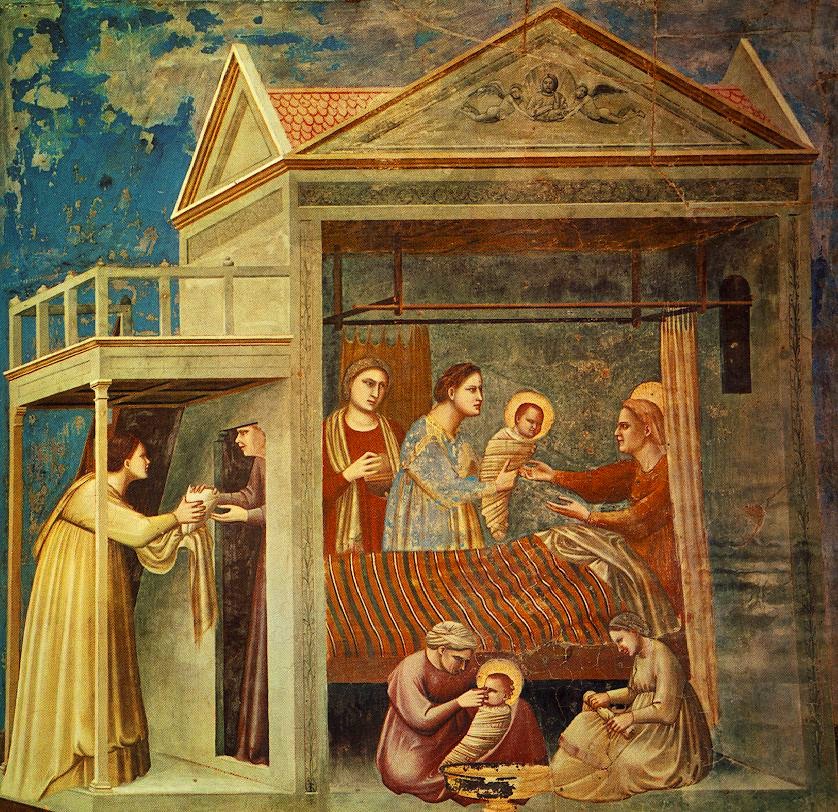
8 Sept 2014 - nativity of mary

You, Bethlehem-Ephrathah,
too small to be among the clans of Judah,
From you shall come forth for me
one who is to be ruler in Israel;

You Mary, too small to be noticed by the world, are set apart by God to bring forth a strong shepherd for the flock of Israel. Not from human strength or glory does our salvation come. Only when you who are to give birth do so does his greatness "reach to the ends of the earth."  We are given him who stands in the strength of the LORD through one who seems to be without strength. We are given peace by one who seems powerless. The world is perplexed.

You are not, O Mary, what you seem to the world.  You are found to be with child and even Joseph, a righteous man, readies to divorce you quietly. But you are not what you seem O Mary. We interpret your weakness after the pattern of our weakness. Our weakness enslaves us, mother, but your weakness brings freedom to the world. Your weakness allows God to ensure "that all things work for good" in you. Our weakness subjugates us to the principalities and powers, the world rulers of this present darkness. We experience our weakness when we try to stand firm on our own. In your weakness you surrender everything to God by your fiat. And you are not abandoned. In your weakness the strength of God most manifest. An angel comes to Joseph to ensure you are protected. You bear a son and name him our savior. Through your weakness comes the one who will save us from our weakness.

It is not because you earn anything, Mary. You are made Queen by a gift. You are exulted as the new tabernacle and temple by the Divine Architect. You are made fit to give birth to Emmanuel, God with us, simply by allowing yourself to receive the grace of surrender from the Holy Spirit.

Teach us then, O Mother, not to be strong apart from the Strong One of Israel. Teach us to embrace the weakness in which God is strong. Let us allow ourselves to be earthen vessels so that we can clearly show from whom the surpassing power comes (cf. 2 Cor. 4:7). Then we will surely join you and the psalmist:

But I trust in your mercy.
Grant my heart joy in your salvation,
I will sing to the LORD,
for he has dealt bountifully with me!

Sunday, September 7, 2014

7 Sept 2014 - elevating relationships

This morning God is calling us to unity.  He wants us to preserve the unity of the Spirit by the bond of peace (cf. Eph. 4:3). He is telling us practically how to live that out.

We are no longer strangers or sojourners (cf. Eph. 2:19). We are brothers and sisters with a Father in heaven from whom every earthly father receives his identity (cf. Eph. 3:14). We have the same Father in heaven as Jesus (cf. Joh. 20:17) and so we are all one family. That is what Church really means. It is the covenant people of God. It is the spiritual Israel (cf. Gal. 6:16). Israel starts off as just a nuclear family and grows to a tribe, and then a nation. Finally, in Jesus, the family becomes international in the Catholic Church.

But we know practically speaking that family doesn't mean that our relationships are any easier. They become more important to us which, if anything, makes them even more challenging. We must be our brother's keeper, not turning a blind eye when we see him heading toward destruction.

If I tell the wicked, “O wicked one, you shall surely die, ”
and you do not speak out to dissuade the wicked from his way,
the wicked shall die for his guilt,
but I will hold you responsible for his death.

If we do something to wrong a brother or sister we can't leave it that way. We have to go to them and try to make things right again (cf. Mat. 5:3). We have to ask his or her forgiveness and try to reestablish the relationship if we can. It can be even more challenging if the brother sins against us rather than we against them. We might prefer to leave well enough alone. But we are still called to try to win over our brother. When our motives might be in question because we are involved it is often necessary to bring in others to help us.  An intervention of several people carries more weight than just our own warning, which might otherwise be dismissed. It isn't enough just be get back to neutral, if we can help it. At the very least, "Love does no evil to the neighbor". That is enough to fulfill civil law and ensure harmonious societies.  But we are meant to be family.  So, "let us not love with words or speech but with actions and in truth" (cf. 1 Joh. 3:1).

If a brother or sister has nothing to wear and has no food for the day, and one of you says to them, “Go in peace, keep warm, and eat well,” but you do not give them the necessities of the body, what good is it? (cf. Jam. 2:16).

And the Church is always there to present to us the standard by which make these judgments. She binds and looses that we might have assurance enough to know sins when we see them. She wants us to have sufficient confidence in her to bring her wisdom into our relationships.

In family we are often tempted to harden our hearts. But "where two or three are gathered together in my name, there am I in the midst of them.” That is why unity is essential. We need this unity because the world needs Jesus here. It needs the floodgates of the Father's blessings opened. And they are opened we agree. They are opened when we come together with one accord like the disciples at Pentecost. There can be no renewed Pentecost apart from renewed unity. The secret then and now is to gather around the Blessed Virgin. Let unite with her in praise to the LORD most high.

Come, let us sing joyfully to the LORD;
let us acclaim the rock of our salvation.
Let us come into his presence with thanksgiving;
let us joyfully sing psalms to him.

Saturday, September 6, 2014

6 Sept 2014 - king me

We are invited once again to become fools for Jesus. We see that the Corinthians are inflated with pride. They have become satisfied and grown rich in the wrong ways. It isn't just that they have a preference for one preacher over another. There is nothing wrong with that. They are taking pride in themselves because of whom they choose. They think, look at how great my preferences are.  They even let that pride create division with those who chose something else.

We don't succumb to this when we embrace the foolishness of the kingdom.  We embrace this foolishness when we remember that we have nothing we do not receive. Boasting as if we have not received, as if we have earned, lays the foundations for strife and division.

The Corinthians become kings without Paul. They believe they earn that kingship. Paul does has a path for them to become kings. Yet it is a path that first appears to be foolish. What kind of throne requires that one first experience weakness, disrepute, hunger, and thirst, rough treatment, homelessness, and toil? Isn't the whole point of being king the power to be free from ridicule, persecution, and slander? And then after enduring all, Paul still says that we earn nothing and that all is a gift. It is just too much.

Yet this is precisely the kingship of Jesus. He offers to share it with us. And we are right to recoil, right to count the cost. That means we are taking him seriously. He is calling us to be so willing to seek first the kingdom of God that we appear to be fools from an earthly perspective. The world has no way to distinguish between the times when we must abstain and times when we may indulge. The world could understand it if we always chose one way or the other. But as it is, kingdom criteria is not so rigid and legalistic.

“Have you not read what David did
when he and those who were with him were hungry?
How he went into the house of God, took the bread of offering,
which only the priests could lawfully eat,
ate of it, and shared it with his companions?”

He isn't calling us toward self-hatred. He isn't calling us to willfully inflict as much hunger and thirst on ourselves as we can. Instead, he tells us to put earthly needs in their proper perspective. Hence, as the they walk through fields, the disciples are allowed to pick grain and enjoy it. Jesus sticks up for them. He defends their right to be satiated. They are on mission and they need fuel for that mission. Since these gifts are being put in the service of the true king they are not a problem.

“The Son of Man is lord of the sabbath.”

Foolishness, it seems, is all a matter of perspective about priority. Let's make sure that Jesus is our number one priority. Let us strive to become kings in the way that Paul does rather than the way the Corinthians do. He says that he will become a king along with the Corinthians when they become kings. But that will happen when they become kings for real and not just in their own estimation. Paul wants this for them because the LORD wants it for them.

He fulfills the desire of those who fear him,
he hears their cry and saves them.
The LORD keeps all who love him,
but all the wicked he will destroy.